hOMES on the tour
sEA MIST
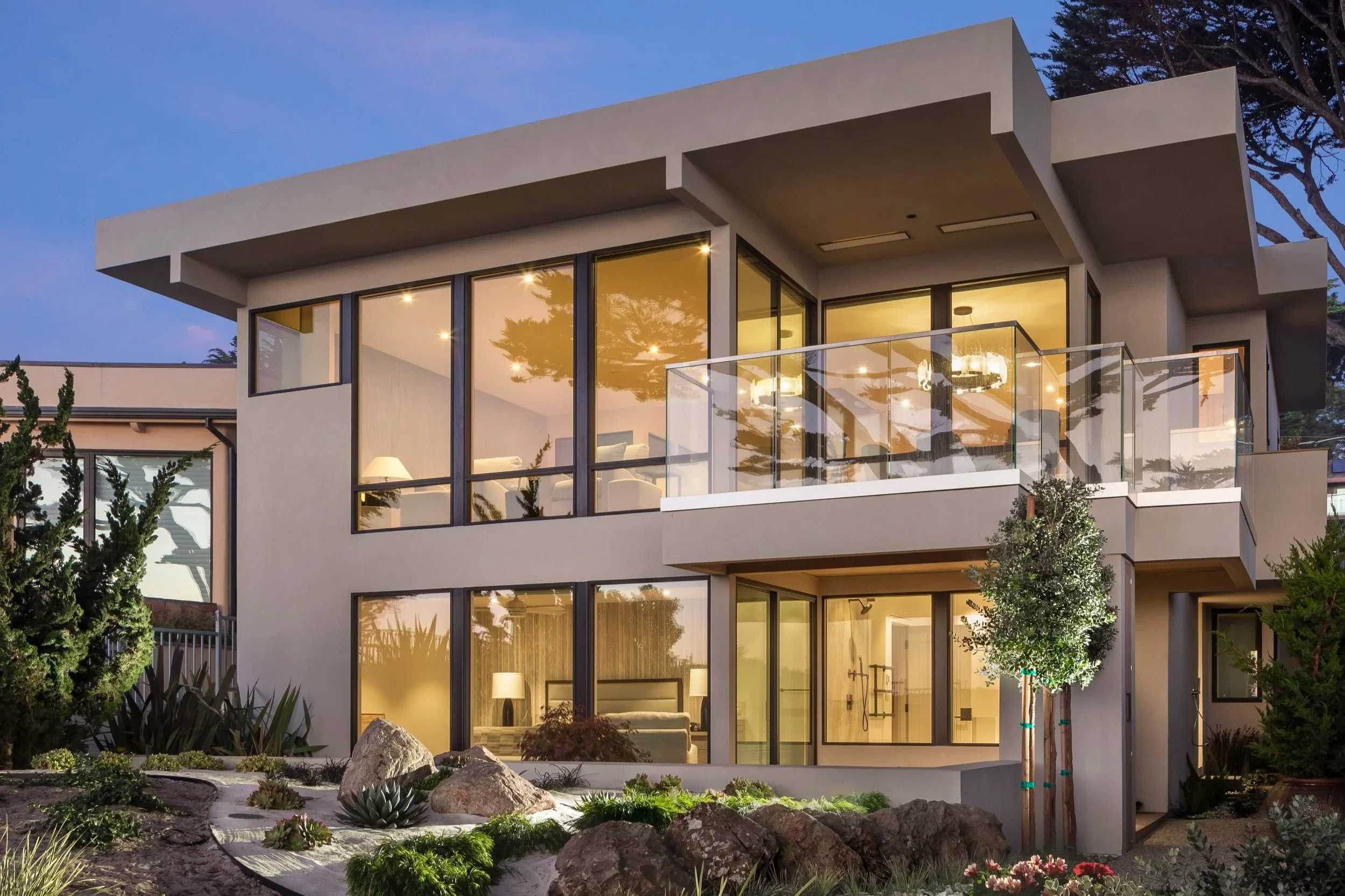
Originally designed by local architect Paul E. Davis and completed in 1977, this mid-century residence underwent a comprehensive remodel between 2021 and 2023. The renovation was led by Samuel Pitnick Architects, McNickle Construction, and Interior Designer Vance Killen.
A central focus of the remodel was strengthening the home's connection to its extraordinary coastal setting. Its colors, textures, and ever-changing landscape helped shape many of the decisions made throughout the home. Expansive floor-to-ceiling windows were introduced along the exterior, opening the living spaces to the dramatic coastline stretching from Point Lobos to Pebble Beach. Interior walls throughout the main living areas were selectively removed to create a more open and cohesive floor plan, maximizing natural light while enhancing the sense of spaciousness throughout the home.
The homeowner described her vision as “sophisticated nature”, and that idea became the guiding principle—creating spaces that feel refined and intentional while still being warm, relaxed, and connected to the outdoors.
One of the most distinctive features of the renovation is the glass bridge leading to the front entrance. Conceived as both an architectural statement and a functional design element, the bridge serves as a skylight that channels natural daylight into a lower-level bedroom directly beneath it. This innovative feature exemplifies the project's thoughtful integration of light, transparency, and modern design, creating a memorable arrival experience while improving the quality of the interior spaces below.
Scenic Road 6 1/2 SW of Ocean Ave.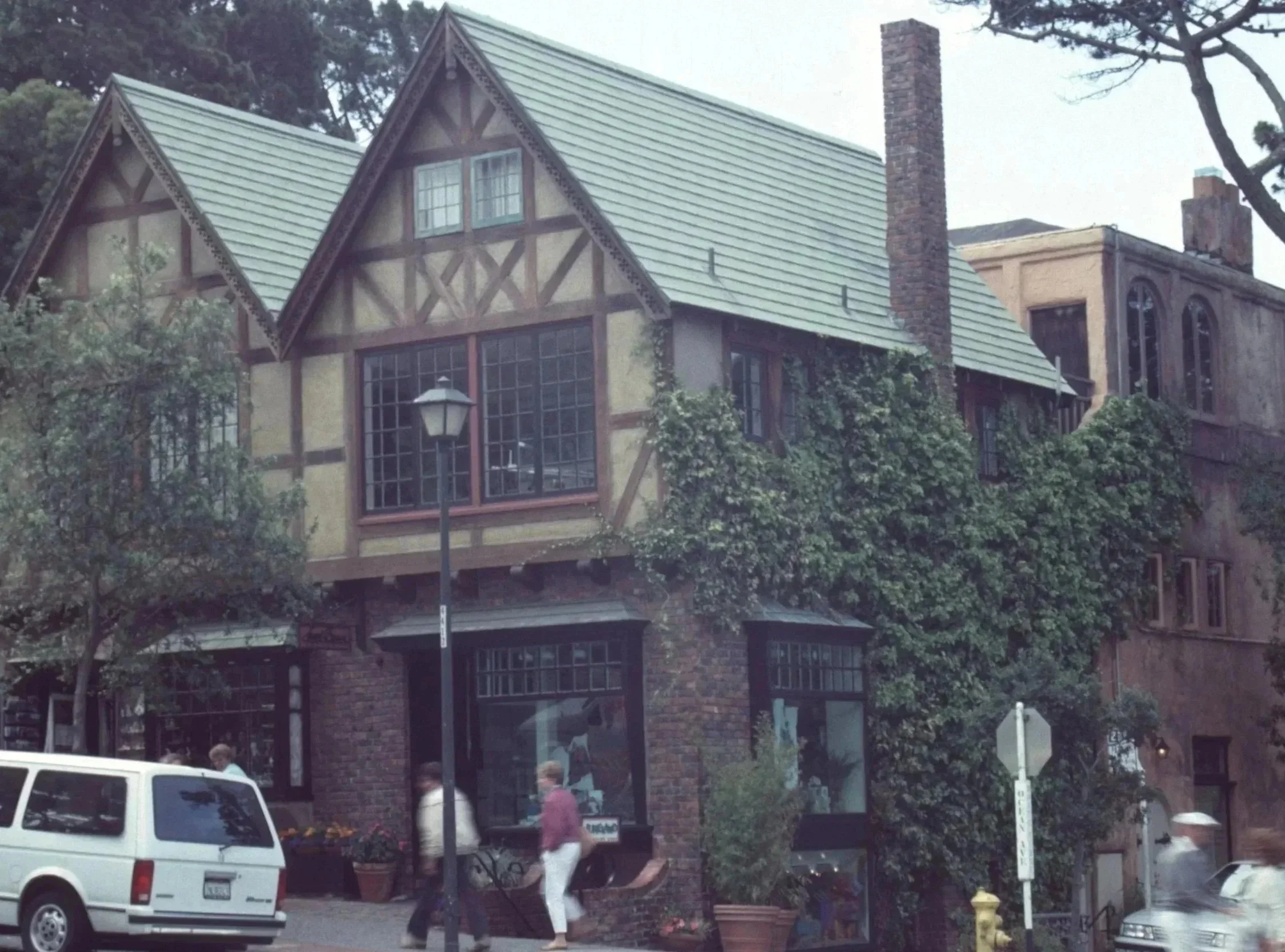
GATES BUILDING
S.E. Corner Ocean and Monte VerdeA distinguished pediatrician, Dr. Amelia Levinson Gates came with her surgeon husband to Carmel around 1910. They hired M.J. Murphy to build a house for them on Camino Real, which they used between sojourns to Europe, San Jose, Los Angeles, and San Francisco. Dr. Howard Gates died in Rome in 1913, where he was chief surgeon of a large hospital. Dr. Amelia returned to San Francisco, where she pioneered in preventive care for children, and helped establish the Florence Ward Hospital. She also continued to spend some time in Carmel, retiring here in 1922.
Among her projects was the two-story commercial building, built in 1927, at the SE comer of Monte Verde and Ocean Avenues. Its design was based on Austrian building types she was familiar with from her travels in Europe. She designed the building as well as managed it’s construction. It is a wood-framed Tudor Revival style, mixed-use building with shops on the ground level and two apartments on the upper level. A true intellectual of the time her home became a mecca for interesting people such as suffragettes, labor leaders, financiers, and many practitioners of the arts. She lived in Carmel until her death in 1947.
FIRST MURPHY HOUSE
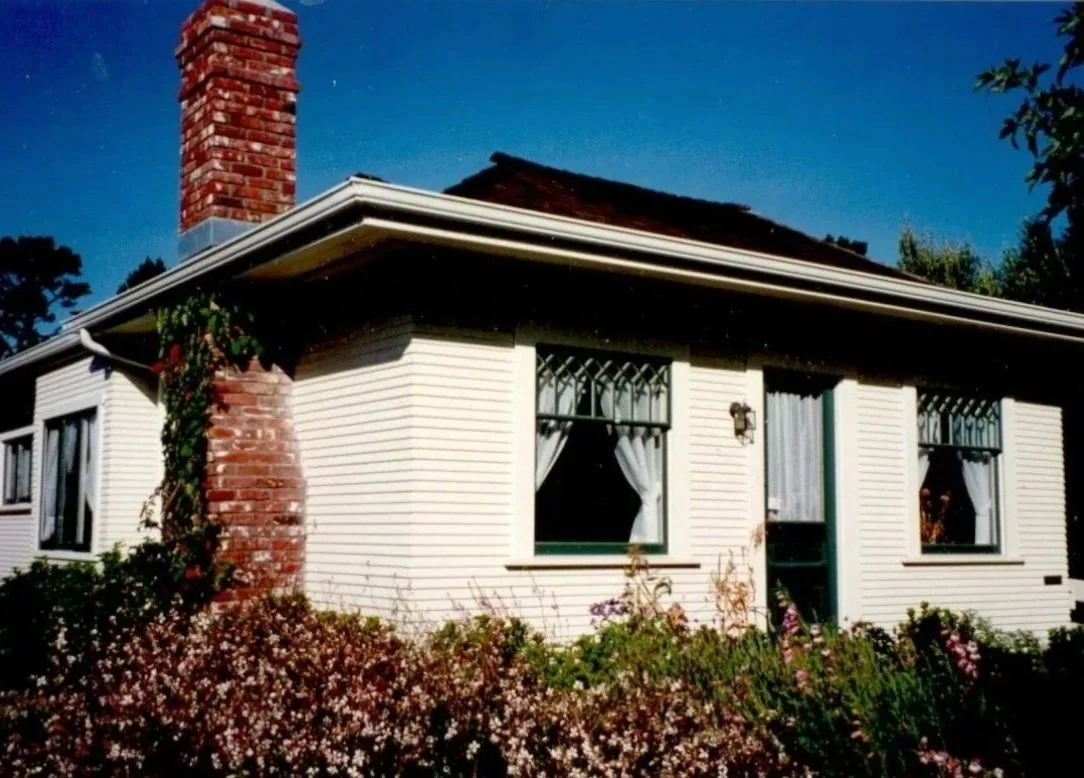
NW Corner 6th & LincolnThe Murphy House was constructed in 1902 by 17-year-old Michael J. Murphy for his mother and sisters on Mission Street between Fifth and Sixth Avenues. The home was a mixture of Victorian and Craftsman Bungalow. It has horizontal clapboard wood siding and a used brick exterior wall chimney located on the South side.
It was the first of many cottages and notable structures designed and built by Murphy. He had a significant influence on the character and architecture of the village of Carmel during his career. In 1990, when the little cottage was in danger of being demolished, the First Murphy House Committee was formed under the auspices of the Carmel Heritage Society. The House was moved to its present site and completely restored.
Pope house
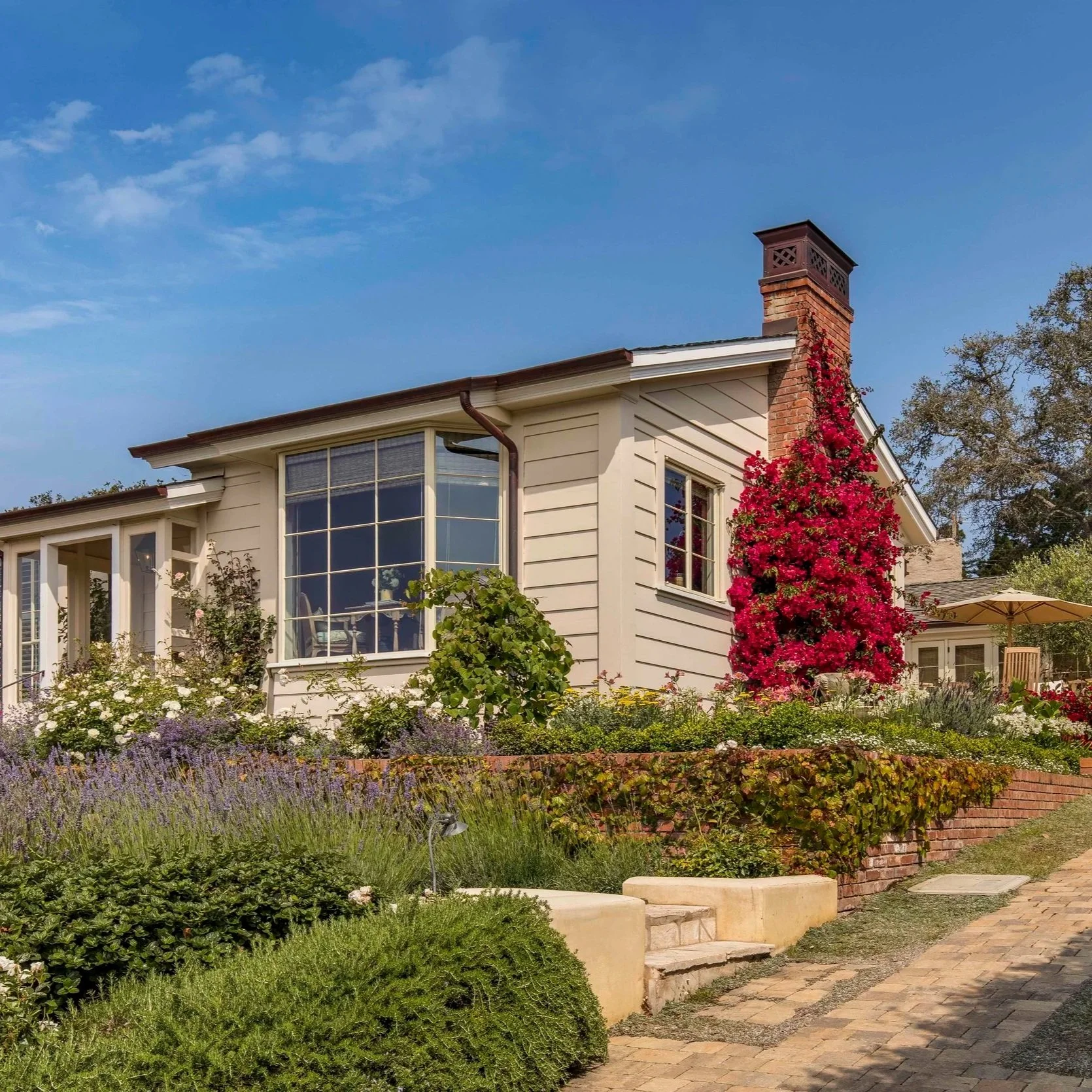
The cottage is set on a charming street above Carmel Mission Basilica in Carmel-by-the-Sea. The original was constructed in 1940 and designed by Julia Morgan for Dr. Emma Whitman Pope, a friend from her undergraduate days at UC Berkeley. Ms. Morgan personally supervised the construction, walking to and from her own studio/cottage in Monterey. Although simple and small, the cottage is deftly designed to capture the views of the area and to provide wonderful light and scale in the interior spaces. An unfortunate addition was built in 1960 that did not complement the historic home.
Dyar Architecture took on restoring the original cottage and replacing the poorly done 1960’s addition with a new primary bedroom suite and kitchen. The new addition enhances the functionality of the home while complementing the original. It is designed to be more in character with the size, scale, and proportion of the original residence while maintaining its historic integrity.
A new courtyard was created so that the home could have a usable outdoor space for the residents and guests to enjoy the views out to Fish Ranch and the Carmel Mission. Both the new courtyard and addition are on the side and back of the property, keeping the character-defining elements of the historic home intact and distinct.
Franciscan Way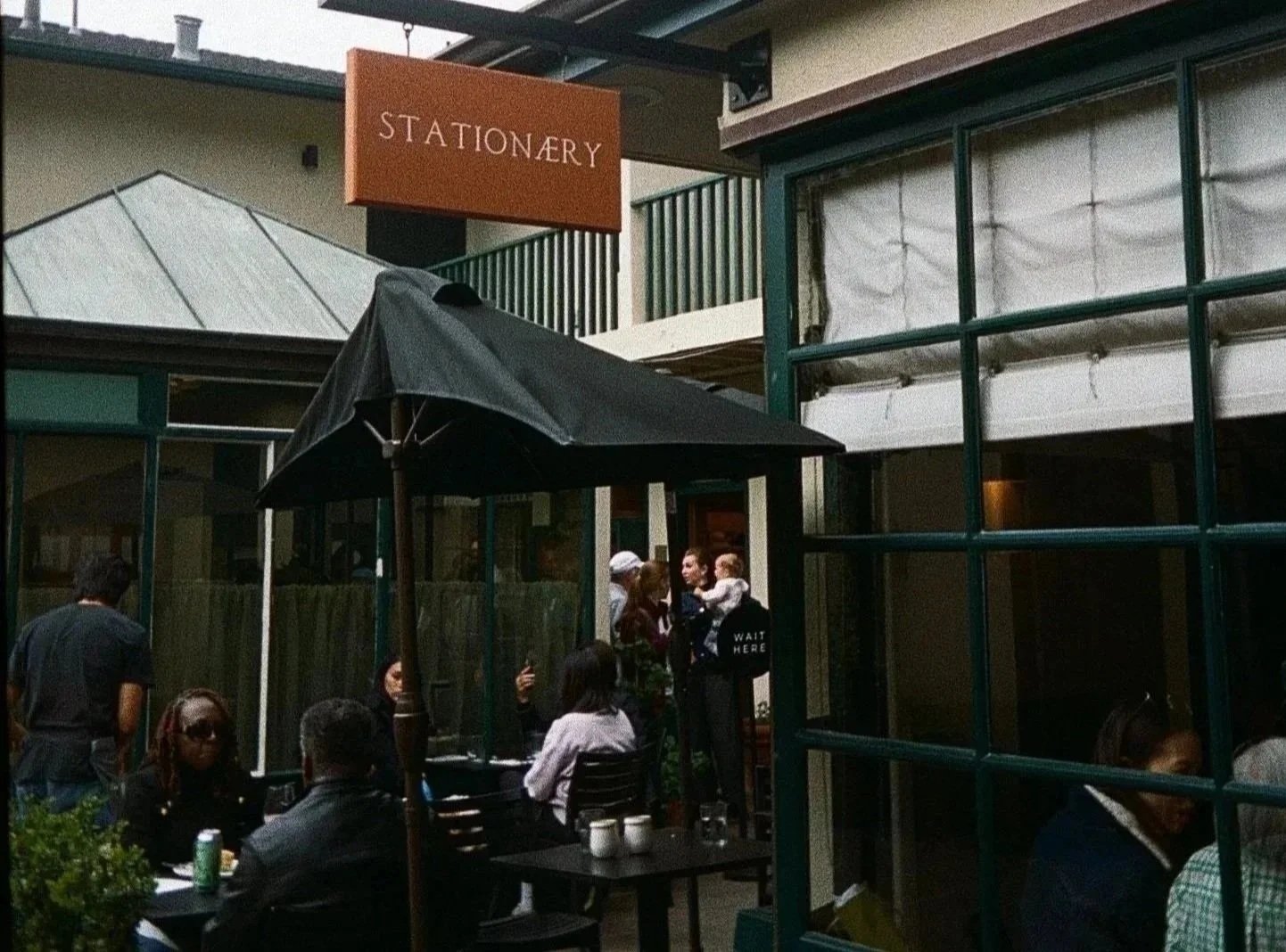
STATIONAERY RESTAURANT
San Carlos Street, 3 NE of 6th AvenueStationæry is nestled in one of Carmel's hidden courtyards. Owners Alissa and Anthony Carnazzo worked with architect and designer Merritt Hawley of MAAD Inc. to transform a glass kiosk adjacent to the restaurant into a private dining room for small gatherings and events. New lighting, finishes, and a petite bar draw on the restaurant's French bistro influences while responding to Carmel's distinctive architectural character. The trio is currently collaborating on two new projects nearby: Mama's Boy, an Italian American sandwich shop and market, and Mammone, a restaurant inspired by the rituals and comforts of Italian home cooking.
Brisa House
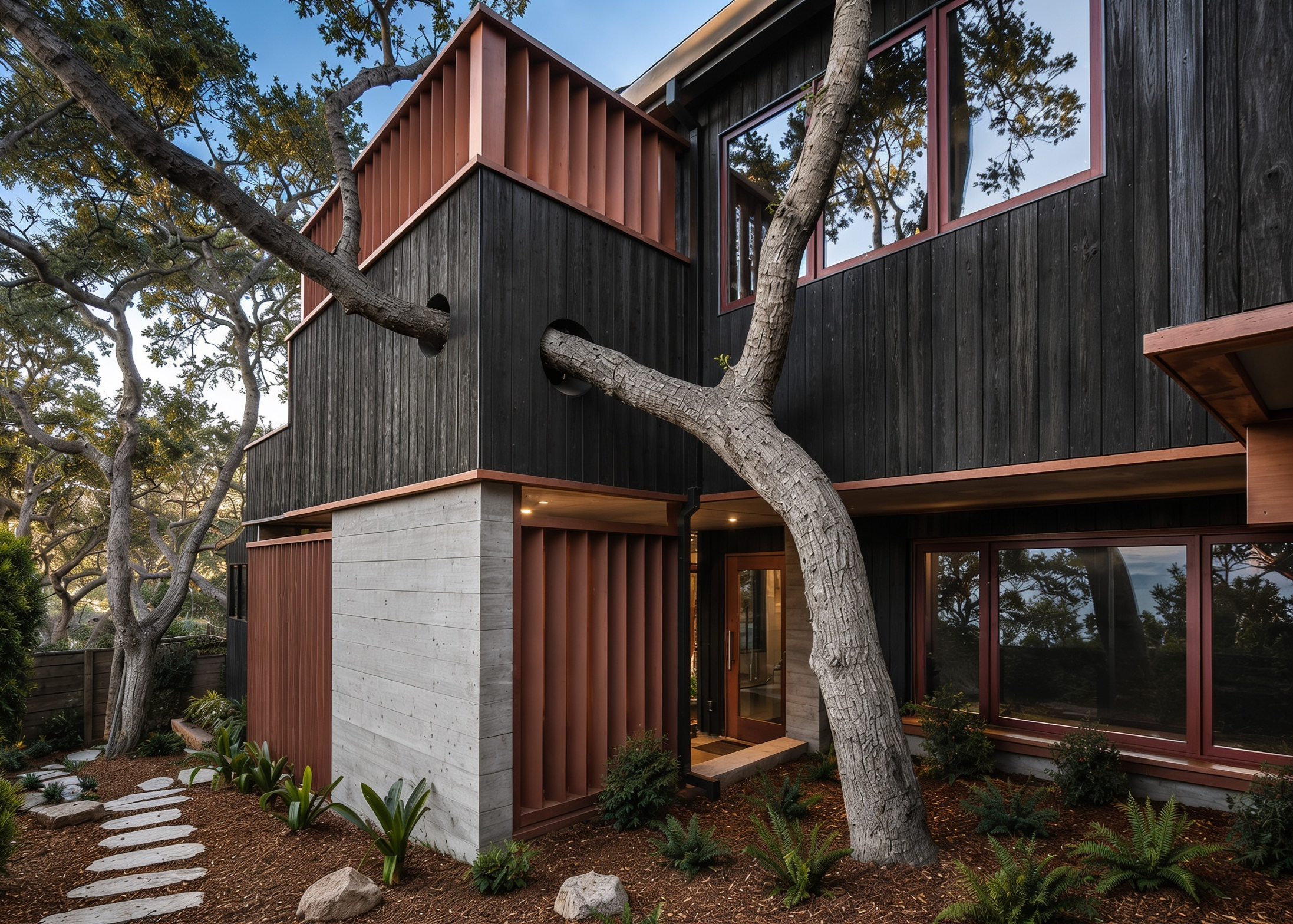
Casanova 9 NW of OceanThe final home in the three-lot Pine Trees development on Casanova, following Feels Wright (2023) and Temple House (2024), Brisa (2025) marks the introduction of Julia Correia's architectural presence in Carmel. Brazil-licensed architect Julia Correia, Board Director of AIA Monterey Bay, joined architect Thomas Bateman Hood, AIA, after the home's footprint had been established by the site's mature oaks. For Correia, the project became an opportunity to help shape how a new Carmel residence looks and lives.
Drawing on contemporary Brazilian architecture, Correia introduced custom wood screens, or brises, that filter light, invite the sea breeze, create privacy, and draw the eye toward Pebble Beach. Set against charred cedar siding and board-formed concrete, the brises strengthen the façade, lending warmth and rhythm that, alongside the living oak branch passing through the building envelope, have become an important part of the home's identity.
Within, Correia reimagined the kitchen, dining, and living areas so the ocean horizon remains naturally in view throughout the integrated living spaces. This fluid, contemporary plan is expressed through custom millwork, concealed storage, and a sculptural floating range hood inspired by the same architectural language as the brises.
Above, a rooftop deck opens to the sunset and the sea, capturing striking views toward Pebble Beach. Tucked into the rear of the property, a detached ADU extends the architectural language of the main residence, crowned by a circular skylight that draws natural light into its independent living space.
Brisa carries a touch of Brazilian bossa, at home in coastal Carmel. An architecture of light, air, and warmth.
4700 Alta Avenuenash & basset | House & studio
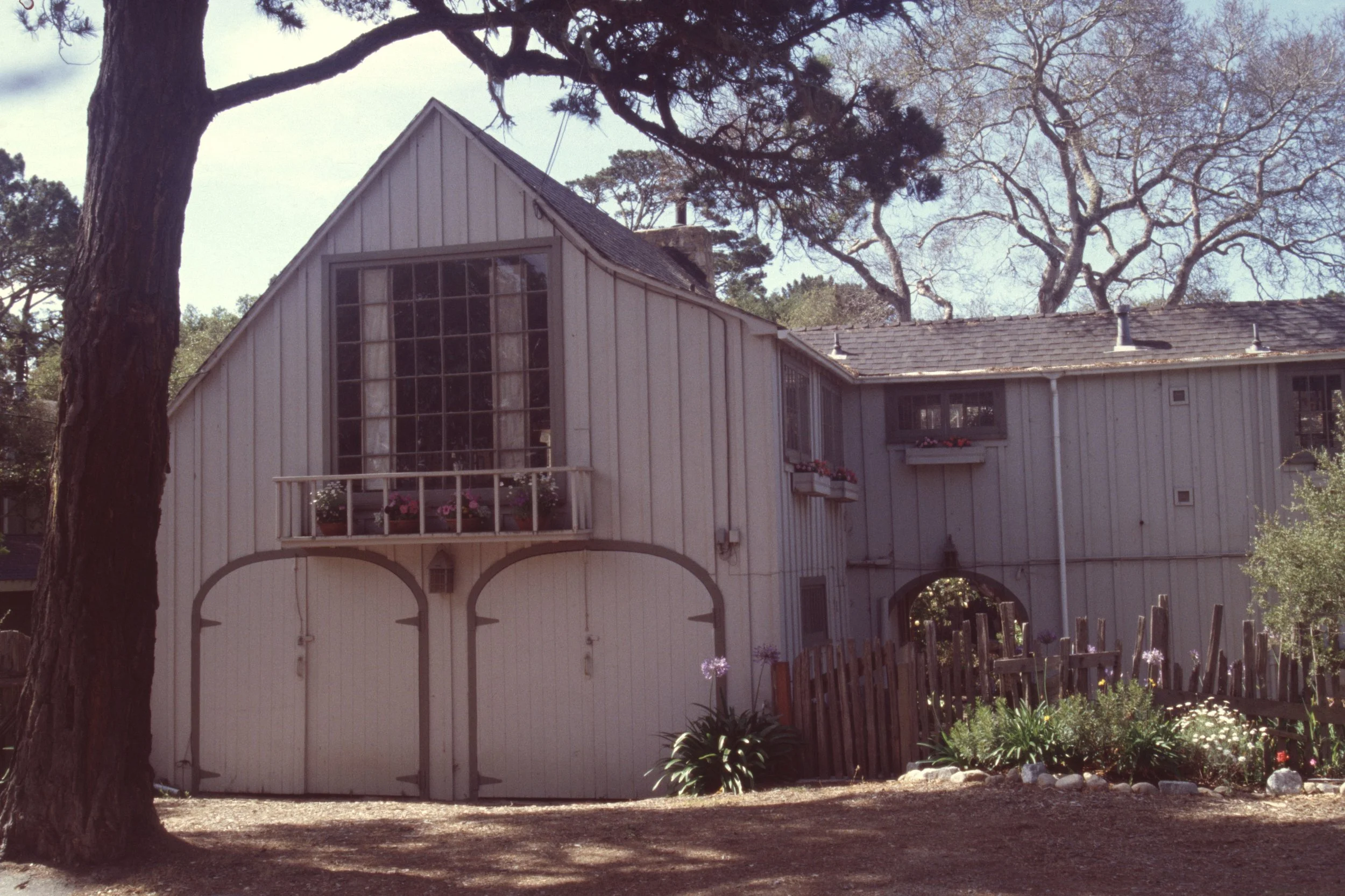
On August 8, 1921, two thirty-something women from Oakland arrived in Carmel determined to build a home of their own — and that is exactly what they did. Anne Nash and Dorothy Bassett, occupational therapy purchased four lots at Junipero and Alta and raised their cottage largely with their own hands.
Their story survives in vivid detail. Anne kept a faithful daily diary throughout construction, recording the planning and labor, the scramble to earn money for supplies, evenings at the Golden Bough and Forest Theater, library books, neighborly gossip, and the village’s perennial worry — water. Dorothy’s brother, W.K. Bassett, would later found the weekly Carmel Cymbal.
In an age when few women built anything, Nash and Bassett designed and built a life as much as a house. Today their Craftsman cottage is recognized on Carmel’s historic inventory and celebrated in the City’s own history programs — a lasting tribute to the women who helped shape this village, and a true Designing Women story.
ISABELLA HOUSE
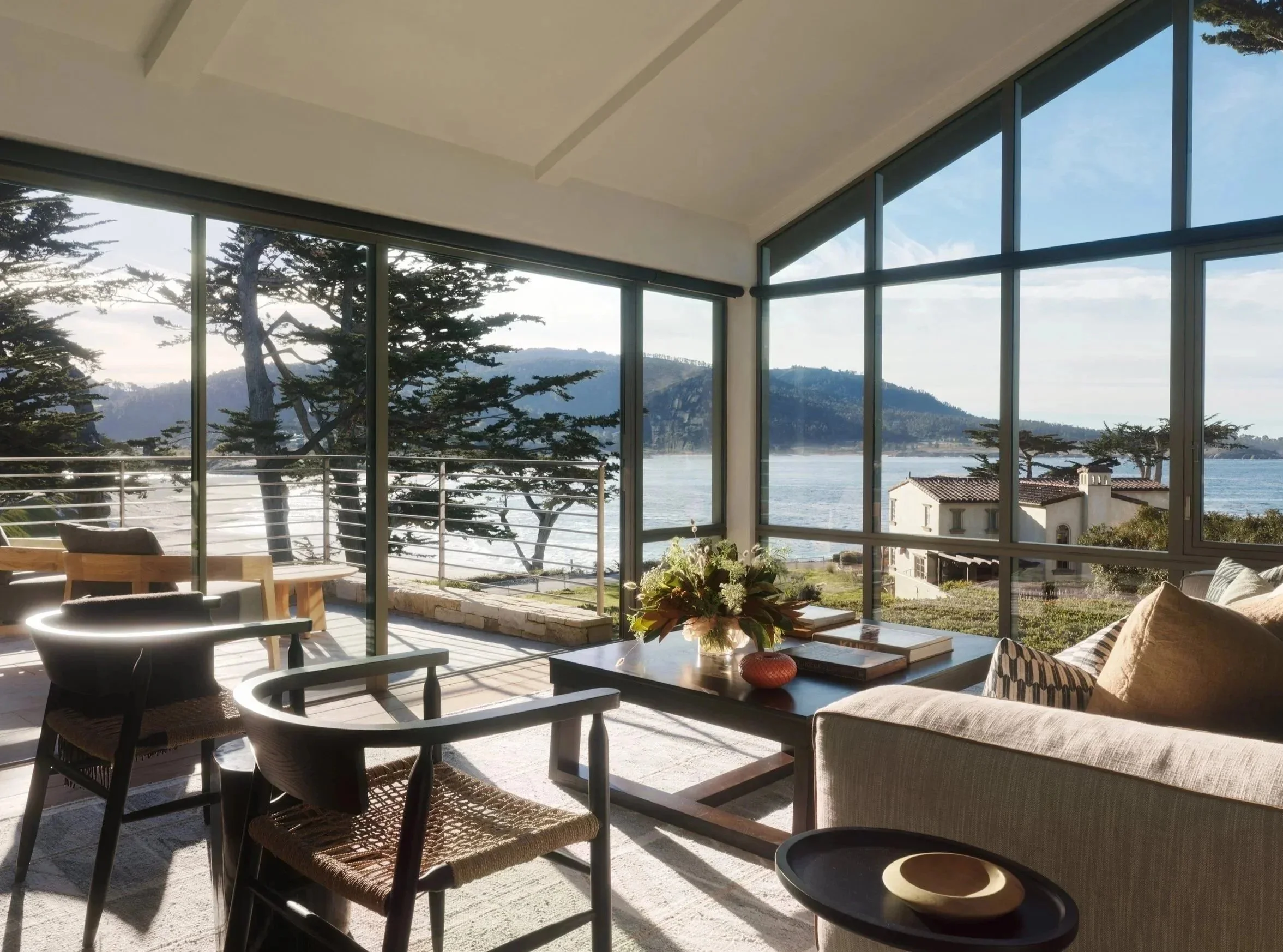
26398 Isabella AvenueBuilt in the 1960s, this prominently sited Carmel home had never fully embraced its extraordinary views, sun exposure, or outdoor living potential. The original stair and fireplace obstructed sightlines, the main living spaces were confined to the ground floor, and the best-view patio was accessible only from a bedroom.
The renovation, designed by Studio Schicketanz, completely reorganizes the house. The stair was relocated to the north side, the garage was integrated into the main volume, and the kitchen and great room were moved upstairs to connect with an enlarged patio. New south- and west-facing openings frame sweeping views of the beach and lagoon. The primary bedroom remains on the upper level, while three ground-floor bedrooms open to the garden, hot tub, and sauna. The former attic space became a loft for work and guests, and an elevator supports aging-in-place. Rich oak, carefully selected marble, and soft pastel tones create a relaxed beach atmosphere. The renovation project was completed in 2025.